
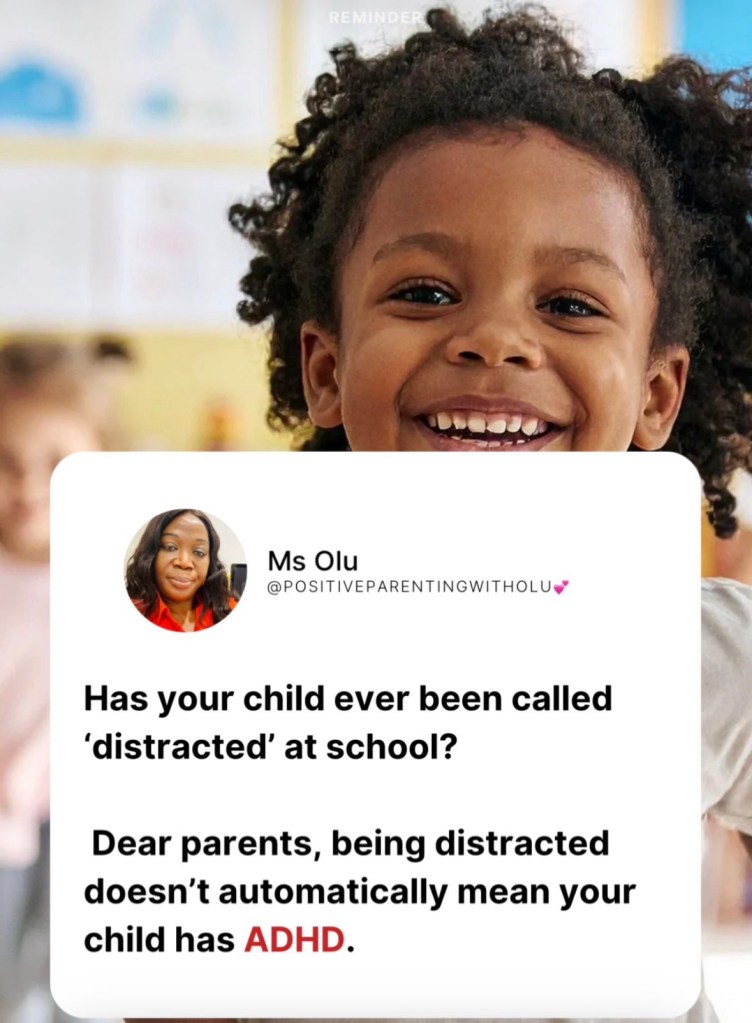
Dear parents, being distracted doesn’t automatically mean your child has ADHD.
Being “distracted” is not a verdict on the child’s intelligence or future. Many bright 10 year olds struggle with focus at this age. It’s feedback that helps identify what support he needs, not who he is.
2. Separate behaviour from identity
remind your son:
👉 “You’re not a distracted child — you’re a child who sometimes gets distracted.”
This protects his confidence and self-esteem.
3. Ask when and how the distraction shows up
Have a calm conversation with the teacher to understand:
- Is it during long lessons?
- Independent work?
- After break time?
- Certain subjects?
Patterns matter. Focus issues are often situational, not constant.
4. Look at what’s happening outside the classroom
At 10, boys are dealing with:
- Big emotional changes
- Fatigue
- Screen overload
- Hunger or poor sleep
Sometimes distraction is a sign of unmet needs, not laziness.
5. Build focus in short, achievable chunks at home
My Advise to you parents is to:
- Use 15–20 minute focused work periods
- Give movement breaks
- Praise effort, not perfection
This trains focus without pressure.
6. Protect the child from adult worry
Children absorb stress quickly. Dear parent, stay calm and hopeful when talking to your son. Fear can shut a child down faster than distraction ever will.
7. Advocate, don’t panic
If the concern continues, suggest:
- Asking for simple classroom strategies (seating, reminders, check-ins)
- Monitoring over time before jumping to conclusions
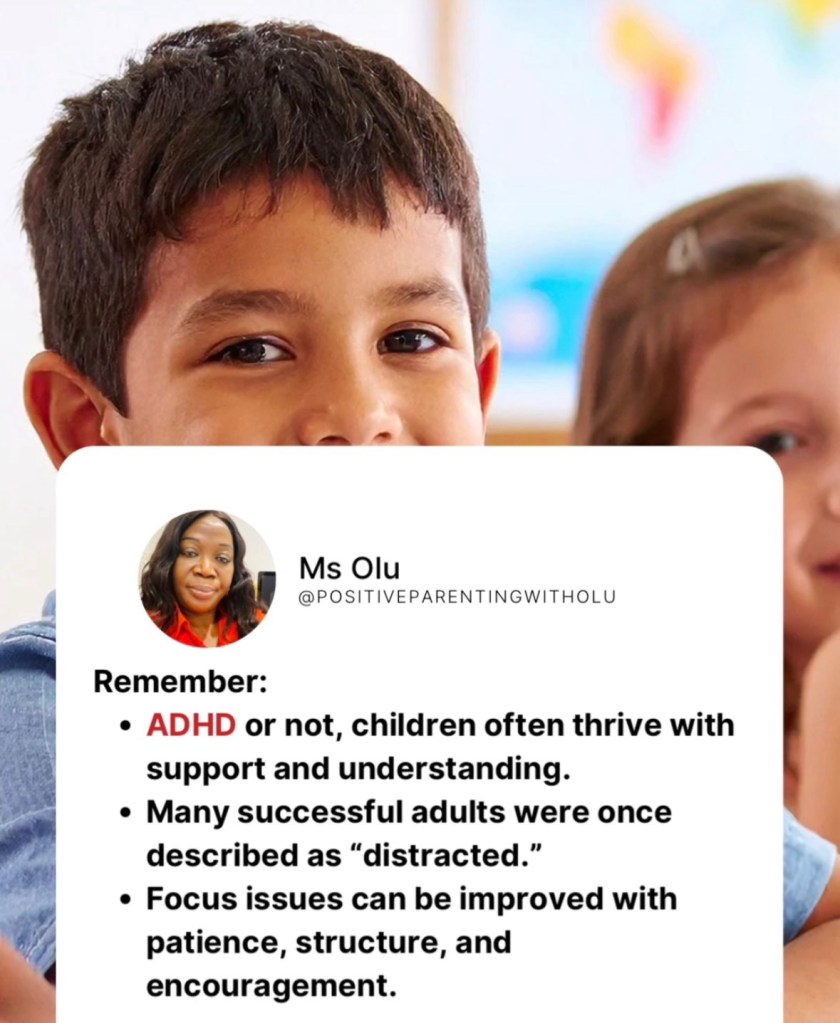
Not every distracted child needs a diagnosis — many just need guidance and structure.
8. In conclusion:
Some of the most successful adults were once the children teachers described as “distracted.”
 Positive Parenting With Olu